
This blog is a digital magazine that shows cases of social innovation promising in terms of sustainable developement. It offers a platform of dialogue for the creative communities that generates these innovations to exchange on the different solutions they promote, between them and with the rest of the citizens that their alternative ideas may stimulate and inspire…

Each article presents one case through a selection of pictures and a written description as it has been collected by the students of 8 European schools participating through the EMUDE project (download presentation brochure).

If you are involved in one case, clicking on “comment” under the case title you may review and correct this draft. If you are simply curious of one case, you post a question, ask for clarification or suggest links with other cases you may know.
The admin team will make its best to edit progressively the text and upgrade each case description…


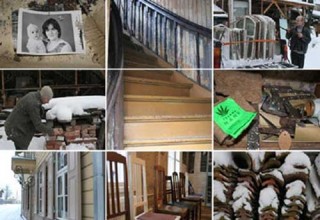
Recycling of historical used construction materials and building

Key Innovation
Organization that supports reusing of valuable construction materials and building items

Problematic background and context
Starting from the beginning of 1990s Estonia has lived in extensive period of construction and renovation. This is caused by political and economical changes, which followed to Independence Declaration in 1991. Shift from public to private property has led to major construction projects of new buildings and roads. This intensive period of development has had strong influence on peoples taste and preferences- “everything that is new and imported from outside the country is attractive, but everything from past and homemade is not worth considering.” This kind of attitude has resulted in several cases of destroying culturally and historically important buildings and wasting valuable materials. Also environmental thinking has developed opposite direction compared to Western European countries-the idea of recycling has gained some attention only in few recent years. Fortunately, there are organizations, which promote sustainable thinking and resource saving economy. One of these is Information Center for Sustainable Renovation (SRIK), whose main project called materjalid.net is supporting reuse of old building materials. Tallinn and other Estonian cities are rich in original preserved wooden dwelling districts, which value lies in their integral milieu and human environment. Among other things also the use of sustainable and friendly materials should contribute to the integrity of milieu.

Solution description
materjalid.net is a project started by Center for Sustainable Renovation (SRIK) and Tallinn Cultural Heritage Department two years ago. Initiative came from Tarmo Elvisto, who is working for SRIK. He is passionate promoter of sustainable thinking and renovation. The concept of the project for recycling used materials and building items was created with the support from renovators and other specialists, whose community in Estonia is very strong and supportive. Project intends to provide people with information about old and used materials and details in order they could find again usage and enrich environment. The aim of the project is to organize collecting, detaching, stocking and transportation of valuable used building and construction items starting from door handles and postbox labels to bricks, stairways and roof details. Information regarding old materials and details, which are worth collecting and recycling, is provided by construction companies or real estate companies, who are developing new projects on the lots, where old buildings will be replaced by new ones. Very often information regarding available used details is provided also by civilians interested in sustainable lifestyle. Project manager Valdur Lillemets is organizing transportation and stocking of materials and is also providing information about new findings via web page. People interested in buying used details, can make booking via web-page or visit stock, where materials are preserved. Besides buying the items, people can also attend special courses and workshops about sustainable renovation. Therefore project is also a kind of educational way to shape peoples mind towards sustainable thinking. Instead just throwing away things that have served us lifelong, people are taught, how to lengthen their lifecycle by generation or two.

Timeframe
Project materjalid.net was started in the beginning of year 2002.

Development phase
Diffusion:
This kind of projects can be found also in other European countries, especially in Nordic area. On the other hand, in the region of old soviet countries, this kind of sustainable thinking and recycling of used materials, is not yet diffused. In Estonia, the project initiated in Tallinn can be considered as pilot, while in other cities the similar facilities for stocking and preserving used materials will be opened by the members of materjalid.net in the near future.
Maturity:
This project can be considered as optimized. Two years of experience has created effective network of people and organizations, which exchange information regarding old buildings, where used materials can be found and detached. Also, the other end of the network is working well, which means that community of citizens, who are interested in reusing of old materials in their renovation projects, is growing considerably. Development in stocking and preserving process is next step to be taken in order to improve the service. Right now the conditions for preserving the materials are very poor, basically it is the open air lot covered with roof. For instance, wooden details would not survive very long in these conditions.

Revenue/costs model
Project was started with the help and funding from Center for Sustainable Renovation (SRIK) and Tallinn Cultural Heritage Department. Its further development has been organized as non- profit organization, which operating costs are financed with the income from sales commission. It is intended to keep project as non-profit also in the future. Project manager, who is coordinating everyday interactions of the project, gets paid on the basis of sales commission. Major developments, such as bigger stocking facilities, will be hopefully financed with the help and funding from specific organizations, such as European Union Structural Funds. Application letter for abovementioned organization will be submitted in the near future.

Social evaluation
New social groups interested in sustainable renovation and recycling of used materials are emerging thanks to workshops regularly organized by materjalid.net coordinators. Participation in workshops encourages personal involvement in renovation process of living facilities. It also shapes peoples minds towards caring attitude regarding the environment they are living in. Nevertheless, more active promotion via mass communication canals would increase citizens’ awareness about options to use old materials in renovation process. There is still very low percentage of citizens, who are aware of sustainable renovation and options about living in original wooden dwelling districts. The overall trends in Estonia are showing people carelessness and poor taste about the houses they are living in.

Environmental evaluation
Recycling of used materials is directly connected to sustainable thinking and resource saving economy. There is no need for using extra energy or production resources when old materials are used instead of new ones. Compared to new construction materials, the used materials are also usually produced in traditional techniques, which means, that they are not harmful for environment.

Economical evaluation
Families, who are buying used materials for renovating their living facilities, are saving money, because new materials costs are higher compared to used materials. In fact, the option to save money is very often the main reason for young families to buy used materials.

Authors
No author associated to the case.


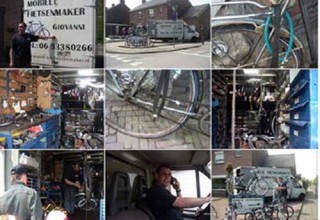
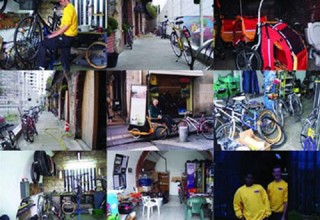
A bicycle repairsman who visits you at home.

Key Innovation
Because the bicycle repairsman is a long existing and good working concept no one had further thought of improving the client aspect.

Problematic background and context
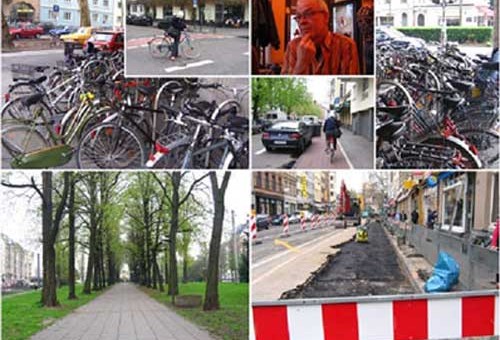
In the Netherlands you could find a bicycle repairsman in almost every neighboorhood and mostly there were even more in the same neighboorhood. These were people who did this job at their own houses on a simple low scale base. But by the time as the quality of the bikes improved these repairsman withdraw from their jobs. Nowadays you can’t find these handy-man any more as much as before. To have a bike repaired now you have to contact a larger professional company and have to make an appointment to bring your bike and a seperate date to pick it up again. So this takes quite a long time and sometimes it’s even a problem how to bring over your bike.

Solution description
The new concept is in principle the same repairsman with the same job. The main improvement is that now this repairsman has a bus in which he has integrated his wrkspace. So now it is possible to bring his worksplace to the customers. So he is a mobile repairsman who can fix peoples’ bikes at instance wherever they want to eg. at home at work on the road etc. etc.

Timeframe
Already available since 3 years on low scale, in a couple of years it will be provided all over the country

Development phase

Diffusion:
This concept has had very much attention since its beginning. Our provider himself has started this concept and for now is the only provider. So actually this would make the concept a unique case. But than again he is ready to recruit other repairsman and provide them with busses for other districts, so this would make the concept ‘ low diffusion’. Another issue is that a franchising company called ‘ Fietsnet’ is preparing a fullscale national project to provide this concept (in about 150 busses) all over the country. So at this stage we would speak about high diffusion.

Maturity:
Giovanni has actually simply used the same old techniques of a normal bike repairsman but now he has improved this job by making it available mobile.

Revenue/costs model
By the time that our provider started this idea he had bought his bus and integrated all his tools and other stuff for about 15.000 euro.

Social evaluation
The society is provided with a new solution that helps people fixing their bikes in a very comfortable easy way. So a very worthfull piece of service is added to the society.

Environmental evaluation
There are no drastical effects on the environment considering this solution. Maybe a slight pollution due to the mobile worksplace which is a bus that is on the road alll day.

Economical evaluation
Economically seen this solution provides work for repairsman again, on the other hand bike users are helped out for a gooed price which is not much more than they would have to pay for a local repairer where they would have to bring their bikes and leave it for who knows how long

Authors
Marieke Moerman / TU Eindhoven / Netherlands


Schuif ‘s Aan

Key Innovation
This initiative offers people who love to cook an opportunity to cook for a larger number of people then let’s say only their wife or husband.

Problematic background and context
Mostly older people in our neighbourhoods are cut off from society, because off the individualization. In this environment there are not many activities for them. The people who started the solution want to make friends, be socially active and create a backup in case one of them would lose their job. They love to cook and want to offer a cheap alternative for people that go out for dinner, so that it is affordable for everyone.

Solution description
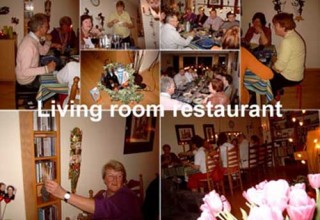
The ‘Living Room Restaurant’ is an occasion for people to have a cheap dinner and to meet other people, located in the residence of the solution providers. After reservation via email or a phone call, people can literally come and sit at the dining table with the residents. After a short chat and getting acquainted with all the guests, dinner is served. The dinner consists of two appetizers, head course, dessert and unlimited drinks. Guests can choose which music they want to play in the background and only have to help with clearing the table between each dish. The providers sit on the ends of the table and between the dishes they switch places so they can talk to everyone who is present. It depends on the cheerfulness how long the evening lasts and after it you have to pay 15 euros. The guests can pick a chewing gum while taking their coats. This is a very interesting innovation since it brings people of our society back together again in their own environment.

Timeframe
february 2005

Development phase
Diffusion:
There are similar other restaurant like this set up recently in Holland, according to a local newspaper, and that is also what the providers think. However none of the people that were in the restaurant when we visited have ever been to a similar restaurant, but some of them did hear from other restaurants like this.
Maturity:
The ‘Living room restaurant’ only started 2 months ago and it’s clearly still in its initial stage. The people are not sure whether they should continue the project, or not. As it looks now they still like the cheerfulness of it, but if that changes they won’t hesitate to stop, because it’s just a hobby of them. They do have a clear idea of what they want in their restaurant, and they’re not testing drastically other set-ups.

Revenue/costs model
Each time the providers organise an evening around 10 people will visit. Each one of them has to pay 15 euro, for their own meal and that of the providers and the unlimited drinks. The providers of the solution don’t make any profit on it, nor do they lose money on it. They shop in regular supermarkets and they do not need a permit for the restaurant since it is a small-scale setup.

Social evaluation
The values and benefits for society are modest. The Living Room Restaurant doesn’t attract a big audience, because poeple are a bit afraid of going to personal places they don’t know. People can also go to the living room restaurant in groups, but that is not the purpose of it. On an individual scale, the benefit can be a lot bigger, because people could meet new friends there while being themselves or at least have a nice evening. The intention is host new people every time a dinner is organised and that almost nobody knows one another.

Environmental evaluation
The values and benefits for the environment are modest too, maybe non-existing. People have to come to the residence with a car or bike. However, they do not have to make dinner themselves. There are no significantly environment friendly benefits or disadvantages for this kind of restaurant.

Economical evaluation
Values and benefits for economy are there. People with lower income can go to the restaurant and have a nice meal for a modest prize. The initiators of the project don’t make any profit out of it.

Authors
Ivo Stuyfzand / TU Eindhoven / Netherlands


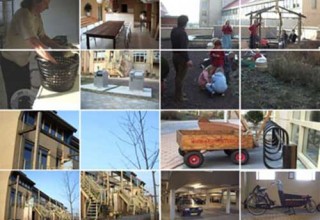
An environmentally, socially and economically sustainable neigbourhood in the city of Utrecht, founded and developed by the inhabitants themselves.

Key Innovation
A socially and environmentally sustainable neighbourhood which was set up by the inhabitants themselves.

Problematic background and context
A group of people wanted to live in socially and ecologically sustainable neighbourhood, but that didn’t exist. So, seven people took initiative to start a neighbourhood like this. After a year and a half of making plans, the city of Utrecht was willing to cooperate. In this time, the group that worked on the plans (the future inhabitants) grew. A location was found, Leidsche Rijn, a new neighbourhood in a suburb of Utrecht.

Solution description
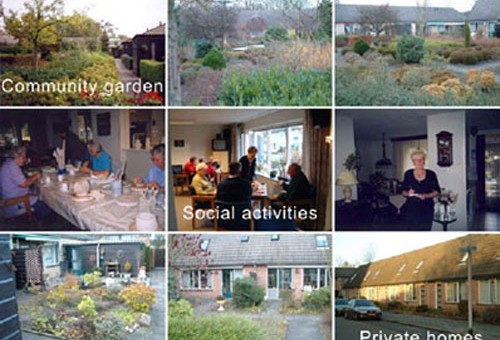
The aim of the solution is to have an ecologically and socially sustainable neighbourhood. Environmentally friendly houses for diverse groups of people (families, elderly), with good contact between neighbours, lots of social activities, where everything is organized by the inhabitants themselves.
The solution came to life after the initiators made a plan which was approved by the city, after which the building phase could start in cooperation with the housing association.
There are two aspects: housing and social. The houses are environmentally friendly (sustainable materials, solar power, ventilation system, etc.). The inhabitants take initiative for all activities (ie. green-group) and new services (ie. car sharing, handcart, carry bike, etc.) in the neighborhood, which is very socially active.

Timeframe
December, 2004

Development phase
There are not many cases exactly like this, but there are cases which can be compared to this one, mainly on the area of environmentally friendly housing.

Revenue/costs model
Inhabitants:
- pay for their parkingplace to association ‘De Kersentuin’
- pay contribution to association ‘De Kersentuin’
- who rent a home have to pay rent to ‘Portaal’, the housing association
- who buy a house have to pay maintenance costs to the owners association
- pay for al the services the inhabitants use (handcart, carsharing, etc.)

Social evaluation
There is a number of benefits for the society: there are fewer cars in the neighbourhood which causes a more child-friendly place, there is a more diverse group of inhabitants, there are lots of activities to bring and keep people together, there is lots of social contact within the neighbourhood, there is lots of social control, there are more and more innovative initiatives, the inhabitants have a better sight on the ‘big picture’ and they feel more like a part of a whole.

Environmental evaluation
More over, there are a number of benefits for the environment. First off, the inhabitants set up a car-sharing project. Secondly, there are lots of green areas which are maintained by inhabitants themselves and by hired forces and private gardens are shared. People share facilities like environmentally friendly washing machines. There are several systems to provide economic use of natural sources (solar cells for energy and rain water for domestic use).

Economical evaluation
Benefits for economy are less obvious than benefits for society and the environment. Economic benefits will probably be of a secondary nature, in the sense that initiatives that originate in “De Kersentuin” might be suited to apply on a larger scale on a commercial level.
There is direct economic benefit for the inhabitants themselves. By organizing certain services themselves and by sharing facilities they save a lot of money. In the future, it will even be possible for inhabitants to receive money from the power company for any energy they produce extra from roof-top solar cells.

Authors
Joris Zaalberg / TU Eindhoven / Netherlands


The Coach House Trust provides occupational, educational and employment opportunities for adults recovering from addiction.

Key Innovation
Trainees learn new environmental work skills through recycling materials, composting and landscaping.

Problematic background and context
The coach house trust seeks to challenge the economical and social exclusion of adults who are recovering from problems associated with mental health addiction and learning difficulties. These people find it difficult to find and keep a job, it happens that the coach house gives them focus and oportunities to gain skills, and be part of a warm community environment.

Solution description
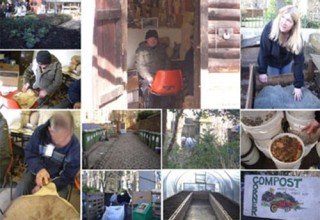
They provide personal, social and vocational development opportunities to their clients in settings which regenerate them to the mainstream community. They achieve this through providing indoor and outdoor workshops and activities such as Ceramics, Woodwork, gardening, and recycling compost. The people work in and with the local community so that mutual trust and respect is built and integration is achieved.

Timeframe
1998

Development phase
Diffusion:
The trust bought a derelict building and have renovated it to become a centre which promotes innovative approaches to education training and employent for the client group.The Glasgow city council allowas the Trust to landscape public areas. They started with the Triangle garden which used to be a public victorian drying green. People come to the project through an open referal system and must bring some funding with them from local health boards.
Maturity:
The trust now has a 100 clients involved and about 20-30 of those arent regulars and there is no time limit. They’ve now reached a maximum capacity of people since they do not wish to become a major organisation in fear of becoming too crippled by bureaucracy.

Revenue/costs model
They rely on many sources of funding but with little profit in the end and their annual turnover is 1 million pounds.

Social evaluation
People who have experienced addiction or mental illness are regularly ignored in everyday society. They find they can be understood and welcomed in the Coach House which gives many opportunities to learn new skills, meet new and similar people and help society in the training and participation of sustainable practices; woodwork, mosaic, metalwork, slab-making, furniture-making, gardening and horticulture, and recycling. Much of this work benefits the neighbouring society. The team works in public spaces, renovating them to create new zones in which to enjoy. Locals have their gardens landscaped by the Coach House, helping the income of the Trust. Much of the crafts work is also sold in their shop or through exhibitions in Glasgow.

Environmental evaluation
The Coach House Trust has many advantages being both in the city and very close to a river and park/woodland areas. The spaces which are on loan by Glasgow City Council mean that much work can be done on renovating and creating pleasant spaces which are used by the public. Gardening and Horticultural practices are learnt by the “clients” and also neighbouring primary and secondary school children. Fruit and vegetables are sold to the public in markets and restaurants. The education of sustainable solutions is vital in todays society as the environment is increasingly threatened and the Coach House Trust highlights this through their practice.

Economical evaluation
The Coach House Trust is a non-profit organisation which is funded by various bodies; health board, charities etc. The “clients” which regularly attend must have funding to be able to be part of the coach house and this money goes towards training, materials and equipment and staff. Although the Trust does not want to expand in danger of tipping the balance, it would be hard to source enough funding to do so. This means that new clients are increasingly unable to join or participate. Any work sold through the shop or restaurants/markets goes towards materials/tools etc.

Authors
Ian Grout / The Glasgow School of Arts / United Kingdom


Improving the living circumstances in a small Dutch village.

Key Innovation
Inhabitants initiative to improve living circumstances and the social network in their small village.

Problematic background and context
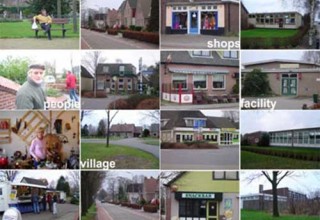
The village of Nieuwlande was small and underdeveloped and there were a lot of problems but no funds and possibilities to make some changes. After the re-dividing of the municipalities Nieuwlande became part of the municipality of Hoogeveen. This gave more hope to the inhabitants of Nieuwlande that this would cause some changes in their village, but after 4 years their still didn’t change anything. Then the organisation ‘Plaatseling Belang’ send an angry letter to the municipality of Hoogeveen and there finally came a reaction.

Solution description
After the reaction of the municipality of Hoogeveen there was a consultation with ‘Plaatselijk belang’ and the advice bureau Arrow. This led to the development of a “village development plan” (DOP Dorps Ontwikkelings Plan). 80% of the village inhabitants participated in a survey about their town. The survey was also conducted by inhabitants themselves. With the results of this survey the people went on and the village consultation group was started. In different workgroups the different problems are discussed and if possible solutions are actually executed.

Timeframe
In 2002/2003 the DOP was set up and is still continuing in the future.

Development phase
Diffusion:
The concept of a village development plan is not really new because the arrow bureau has also worked with other villages in the past with this solution. But the uniqueness of this particular village is the high inhabitant participation which makes it such a success. It is not a high diffusion case because how this town handled the solution is very unique.
Maturity:
The solution is already in working for some years now and actual results are visible and by winning an international award and still having a lot of success with the system it has proved to work in this situation.

Revenue/costs model
For each solution that comes out of the research of the different workgroups of the village development plan the municipality of Hoogeveen needs to give approval and provide funds. So the municipality of Hoogeveen pays for the solutions of the village development plan.

Social evaluation
By using the village development plan the inhabitants both gain individual and collective advantages. Individually they feel more involved in what goes on in their town and they can make a difference themselves. And the collective advantage is that their town is finally developing further, and really has a future. Also because so many people are involved with the development the village is also communicating better and this creates a better society.

Economical evaluation
Because the inhabitants themselves find solutions for actual problems in stead of the municipality the solutions that are executed are really necessary and are approved by the entire village. With makes the decision process a lot more efficient, and as time saves money. Also wrong decisions are more limited because of the extensive research that is done by the workgroups.

Authors
Floor Mattheijssen, Laurie Scholten / TU Eindhoven / Netherlands


Enabling users to share opinions nationwide

Key Innovation
Providing a meeting point on the internet where creators and users can share thoughts and opinions with a large number of participants.

Problematic background and context
The problematic background for starting a weblog was a need to share, mostly funny, information to friends and a larger crowd. The success of these weblogs created a new opportunity for its users. They were now able to reach a large audience with their opinion. Conventional media (e.g. newspapers, television) didn’t offer users a chance to express their opinions and to engage in discussion with others. This is mainly due to financial, technical and censorship reasons. People had no chance to express their opinion and to discuss it with a large audience.

Solution description
A weblog is a website on the internet that regularly adds new information items. The first weblogs started as a simple website to quickly place and store items. Sometimes the creators would add a personal opinion. Nowadays a weblog remains a website to place and store items on. But the improvement is that weblogs have evolved into a window of opportunity to express the opinions of many users. Users can now view, post and comment on items. The items vary from stupid or even offensive pictures and movies to serious and even scientific articles and columns. People can (anonymously) express their opinions, feelings and beliefs too a large audience. Because it makes use of the internet the amount of potential viewers and participants is extremely high.

Timeframe
Weblog can already be realized with current technology and can be set up in literally minutes.

Development phase
Diffusion:
Since internet access is becoming a commodity, weblogs are growing in numbers fast and only now the conventional media are starting to get aware of them and begin to see their potential. For years weblogs were only known to ‘insiders’.
Maturity:
Because the facts that it’s an open source technology that is available to every person with an internet connection, and that weblogs are maintained by large groups of users, many weblogs evolve rapidly. There are weblogs that started only two years ago with a handful of visitors, and who now receive more than 700.000 unique visitors a day. This also causes great development in the technology behind the weblogs. Because of constant user feedback the weblogs keep improving.

Revenue/costs model
Starting a weblog costs nothing. When the user wants his own domain he needs web hosting which costs about €5 a month. Hosting costs increase when the weblog contains more information and when it attracts more users (more users who download/view the site generates more data traffic which has to be paid by the owner. Most weblogs rely on the work of volunteers.

Social evaluation
Weblogs have quite an impact on society. High numbers of people have the chance to be heard. To be heard by a large audience that consists out of various people in society. And there is a great room for discussion, which can result into better informed, or at least more into depth, information gathering. Society can benefit from this because people can start discussions on the internet about things that bother them, they can be heard in stead of always listen.

Environmental evaluation
Weblogs are aware of their attractiveness and impact that they can generate. And this position can be used to make people aware. For instance Dutch weblogs have started quite large campaigns to raise money for the Tsunami-disaster in Azie, all on their own specific way. Also the weblog retecool.com has lend its strengths to a popular radio station, to raise awareness and cash for the situations in Darfur. Concluding, weblogs have the power to create awareness.

Economical evaluation
Weblogs are cheap and very effective. Its marketing use is already known and powerful. They also start their own merchandise shops. In the near future weblogs might also become commercially self-supportive.

Authors
Mathijs van Wijnen, Tomas Schietecat / TU Eindhoven / Netherlands


Promoting the use of garbage in childrens’ creative explorations

Key Innovation
Challenging (young) people to explore creativity with existing garbage objects to promote the use of garbage in expressive works (artworks) and thereby questioning the image of garbage in general.

Problematic background and context
On the one hand, schools often lack employers who can guide students in their creative explorations. Their teachers in art-like disciplines often focus on the quality of the artistic creations themselves, instead of focussing on the thought that provoked them. Also, the teachers are often not artists themselves, being more concerned with the pedagogic issues instead of creativity itself. On the other hand, artists love to share their passion for art and creativity with people and especially young people, who are often more open-minded and less reserved in their approach to art. The two main issues are that artists often do not have any pedagogic education as a backbone during sessions with young people and that the world of artists and the of schools are very distinct and separate (i.e. it is hard to get in contact with one another) and often cooperation only happens when artists contact schools.

Solution description
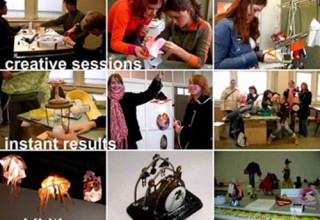
The aim of the solution is to bring schools and artists together. The solution consists of a few elements. An NGO (BISK) that acts as mediating agency between schools and artists. This agency is subsidized by government, but aimed to become an NGO. A pedagogic course has been created to support the artists involved. In Eindhoven, there is also an organisation that promotes the CKV-week=yearly high-school course for artistic and cultural education in NL. The innovative part of this solution is that it provides a valuable contribution to the creative evolvement of pupils at schools. It fills the gap between schools and artists and extra value is added by the pedagogic course for artists. The solution gives students the possibility to learn new tools and materials to express themselves and brings them into contact with real artists. This solution gives an impulse to the creative competence of society as a whole and promotes a creative, open-minded and out-of-the-box, approach to life.

Timeframe
The solution is now already put into practise and to provide this solution in other places is relatively simple: the artists, schools and pupils are already available; the only thing to activate it is to set up an agency to bring them together. When it works well, a course can be set up to make the solution more valuable by providing artists with pedagogic insights and practical information.

Development phase
Diffusion:
This is a low diffusion case. It is not the first time that schools and artists work together and it seems highly plausible that setting up an organisation to connect schools and artists has been done before in the world. However, at the moment I could not find any agencies/organisations like BISK (i.e. explicitly connecting schools and artists on a regular and well-organized way).
Maturity:
The solution is, on a regional level, in an improved stage, for a agency BISK has been set up to connect schools to teachers (i.e. an new service to support the goal).

Revenue/costs model
BISK (the mediating agency/organisation) is now subsidized by the government. However, other organisations that have provided the same functionality too (e.g. CPSE Eindhoven), but on a less frequent and constant base, have already proven that it can be done with a minimum of money.

Social evaluation
On a personal level, the pupils get a chance to get in contact with the “mysterious” profession of the artist and are guided in they creative exploration by a real professional, about the ideas behind the creations and how to translate them. This might give an impulse to be more creative and, by doing so, create a more creative attitude in general. On a social level, this solution enables the creative and cultural aspects of education and might help society evolving into a more innovative and creative society, where need for creative expression is valued and practiced.

Environmental evaluation
There are no real benefits for the environment by providing this solution, but it has no negative effects either. When (as in my case study) the artists are using “prosperity leftovers” (garbage of e.g. consumer products, toys), there is an environmental aspect to this solution. It that case it reduces that amount of new materials that are used in creative sessions (e.g. no new paper, paint and clay), and it may also provide the pupils with some insight in the value that is still in the things that we sometimes name “garbage”.

Economical evaluation
The schools need to pay the artists their effort, but for the artists has other strong motivations, apart from the money (e.g. wanting to share their passions, the inspiration they get from working on art with children), the payment does not need to be anything more than compensation for the time they spend on this creative session. The mediating agency also needs to be self-governing to secure independency, but previous attempts have proven that this should be possible (CPSE). However, at the moment it is subsidized by government.

Authors
Laurie Scholten / TU Eindhoven / Netherlands


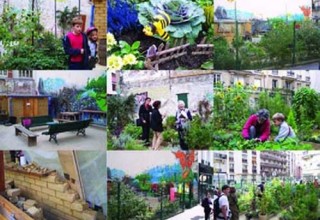
How to transform an abandoned plot into a shared neighbourhood garden?

Key Innovation
To inspire the creation of temporary (nomadic) local gardens on empty plots throughout Paris.

Problematic background and context
How to transform an abandoned plot of municipal land into a shared neighbourhood garden? The Jardin Nomade (JN) is in a quiet residential part of Paris, situated between two busy streets to the East of the Bastille. Despite the lively shopping, café and bar activities which attract young people and tourists from all over Paris, a local spirit persists in these neighbourhoods, and is fiercely supported by local associations such as the Association du Quartier Saint Bernard (AQSB). On the initiative of local residents, supported by the AQSB, the JN was developed as a community garden, built on a 270m2 site, abandoned for almost a decade. Daily care and cultivation of the vegetable garden is undertaken by local residents & families and local schools provide environmental education activities for the children.

Solution description
The JN transformed an insalubrious abandoned plot into an open, healthy, shared community garden, offering a free and open space where locals of all age groups can meet and share this project. Claudine Raillard, professional gardener, provides the general management and supervision of the garden, draws up contracts, distributes individual garden plots, gives gardening advice & programmes activities, undertakes environmental research (such as water collection) & also organised the brick architecture (hut) project. The AQSB also organize monthly meetings, within and beyond the neighbourhood (by holding social events, such as soup parties), making sure that something is always happening in and around the garden, developing local initiative. JN has inspired the design of a system (“Main Verte”) by Paris City Hall Parks and Gardens Department.

Timeframe
Many years to persuade City Hall. JN is open since 2003.

Development phase
Diffusion:
After several years of persistent action and a change of municipal leadership, in 2003 an insalubrious eyesore was transformed into a dynamic, locally run garden, meeting and events space. From an empty plot, finally the first flowers and vegetables were harvested in 2004. The garden is booming! The JN is now authorised to remain on site until 2010. JN has inspired the design of the Main Verte system which is an environmental charter created by the Ville de Paris (Parks & Gardens Department), which underpins the protocol for use of the garden, and sets out rules for environmental behaviour. The charter has served to inspire other similar projects in Paris and its periphery.
Maturity:
The garden is matured and the success of the neighbourhood dynamic widely recognised. Originally designed to “move on” once the city-owned plot is reclaimed (a multimedia Centre is programmed to replace the garden in 2010), locals hope that the City will make the garden permanent. This seems more and more probable.

Revenue/costs model
City Hall loans the site, provides infrastructure (water & electricity), servicing (waste management) & equipment (fencing, soil, growing boxes). JN provides management, supervision & gardening advice & distributes the 54 garden plots @21€ each, 50% for JN (insurance, maintenance, phone, small equipment, meetings, parties), 50% to City Hall (for childrens projects).

Social evaluation
JN inspires inter-generational interaction, involvement with schools (“extending” activities outdoors to a safe, local city venue), associations, & creates a healthier environment. Claudine Raillard (AQSB) is devoted to community action and increasing environmental awareness through city gardening. Principally used by local populations plus some passers-by, teenagers are taking an interest in the garden since the mural was painted by young graffiti artists, animating the back wall and making the garden visible from far away. Even elderly and unemployed are finding roles/exchanging expertise.

Environmental evaluation
The “Main Verte” charter supports such initiatives as part of Paris City policy for sustainable development - encouraging local consultation/participation, “greening” the city, etc. Within the system, all sites must respect the environment, develop biodiversity & encourage actions to develop environmental and civic responsibility, especially in the young.

Economical evaluation
The garden is maintained at a very low cost due to the enthusiasm of the individual/ institutional plot hirers. The system is possibly over reliant on goodwill, unpaid workers.

Authors
Liz Davis / ENSCI Les Ateliers / France

Next Page »